Carolinas DASH Hosts Local Benefit Mechanism Workshop and Solar Tour
Article sections
By: Anna Weitz, Clean Energy Engineer
As part of the Carolinas Development Assistance and Siting Hub (DASH) project, the Center for Energy Education (C4EE), a partner of the NC Clean Energy Technology Center (NCCETC), hosted a Local Benefit Mechanism Workshop and Solar Tour on September 23rd in Warren County, North Carolina. The full-day event brought together public officials, community leaders, and planning board members from Warren, Edgecombe, Halifax, and Northampton counties.
The morning session focused on strategies for ensuring clean energy projects deliver meaningful local benefits. Mozine Lowe, Executive Director of C4EE, opened with an overview of Local Benefit Mechanisms, noting that C4EE itself was born out of such an agreement. When a solar developer leased land at the former Halifax County airport, the county received a building in return, now home to C4EE, which provides education and resources to the community.
Following this example, experts from the National Renewable Energy Laboratory (NREL) delivered a “Benefit Mechanisms 101” session. NREL defines a Local Benefit Mechanism as “an agreement, fund, or other mechanism voluntarily used by a developer to provide additional financial or nonfinancial benefits to a community.” In practice, these benefits often take the form of donations that support education, public safety, food pantries, or Future Farmers of America (FFA) chapters. A representative from SolSmart also shared how their program provides free technical assistance to communities pursuing solar ordinances.

After lunch and discussion, Anna Weitz of NCCETC introduced attendees to the Carolinas DASH initiative and highlighted the free technical assistance available to local governments across the Carolinas. She also shared that Carolinas DASH maintains an ordinance database on its website hub that compiles solar, wind, and storage ordinances from across the region, an important tool that helps local governments compare approaches and learn from what other counties are doing. Local governments can request assistance with ordinance considerations on the website’s technical assistance request form, found at the bottom of any of the content pages.


Overall, the workshop participants valued the chance to explore practical options for benefit-sharing, learn about resources available to them for assistance, and hear directly from peers about lessons learned in nearby counties.
In the afternoon, the group traveled to Bullock Solar Farm in Vance County, a 50 MW facility developed in 2017 by Cypress Creek Renewables. Staff from Cypress Creek led a guided tour of the site, where attendees observed key design features such as a 100-foot road setback and a 30-foot vegetation buffer. They also had the opportunity to hear the sound of an inverter and gauge how quickly the noise dissipates with distance. The tour concluded at the onsite substation, located within the project’s fenced perimeter.
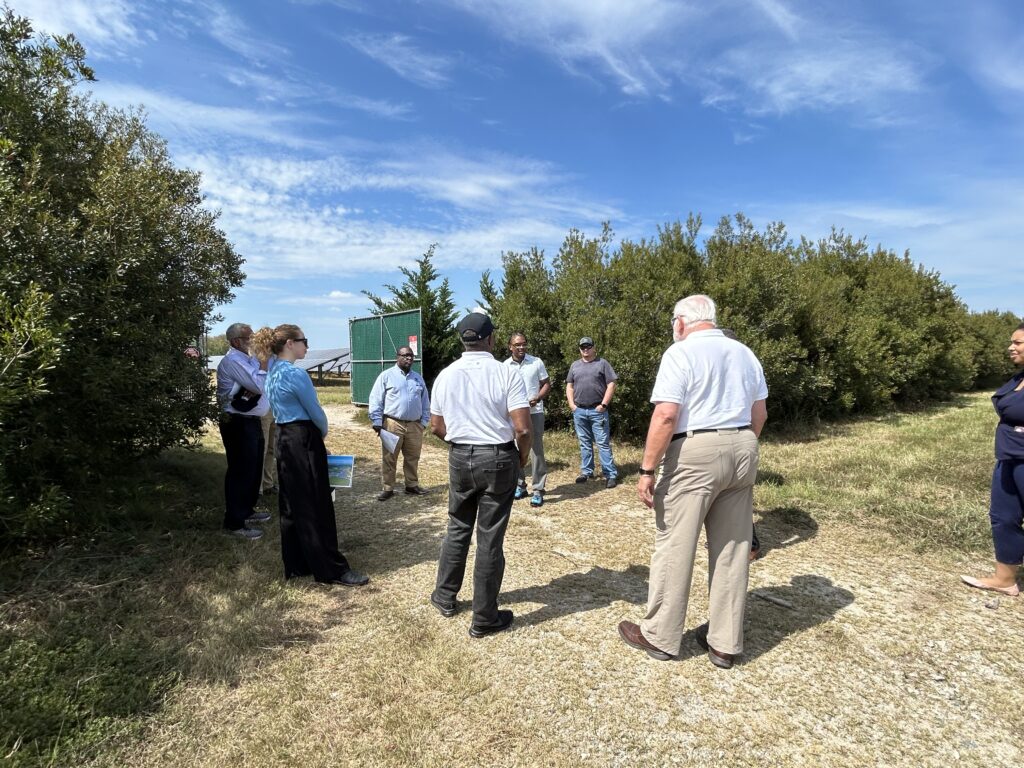
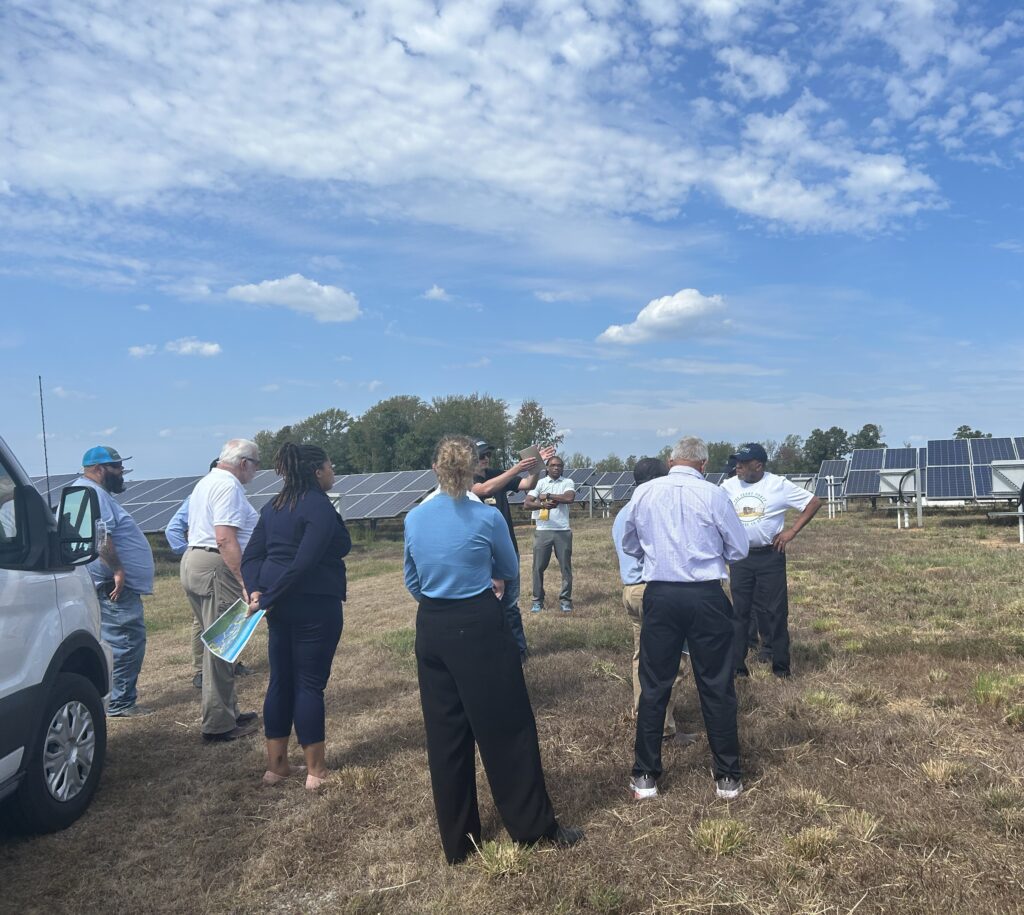
By seeing these features firsthand, participants gained a clearer picture of how solar projects are designed and operated in practice. The combination of expert presentations and the site visit left attendees with a deeper understanding of both the policy tools and the real-world considerations involved in solar development.
