Technical Solutions to Support Future Energy Use
The NC Clean Energy Technology Center (NCCETC) houses a team of experienced engineers that help identify practical solutions to reduce energy spending, while supporting sustainability or resilience. The Clean Power and Industrial Efficiency (CPIE) team has assisted large energy users, manufacturers, rural small businesses, agricultural producers, communities, and others with services tailored to their goals. The team primarily serves entities within North Carolina, however certain programs allow them to collaborate in areas throughout the Southeast United States.
Currently, the team is part of several programs that provide support to organizational professionals seeking assistance in preparing for their future energy use.
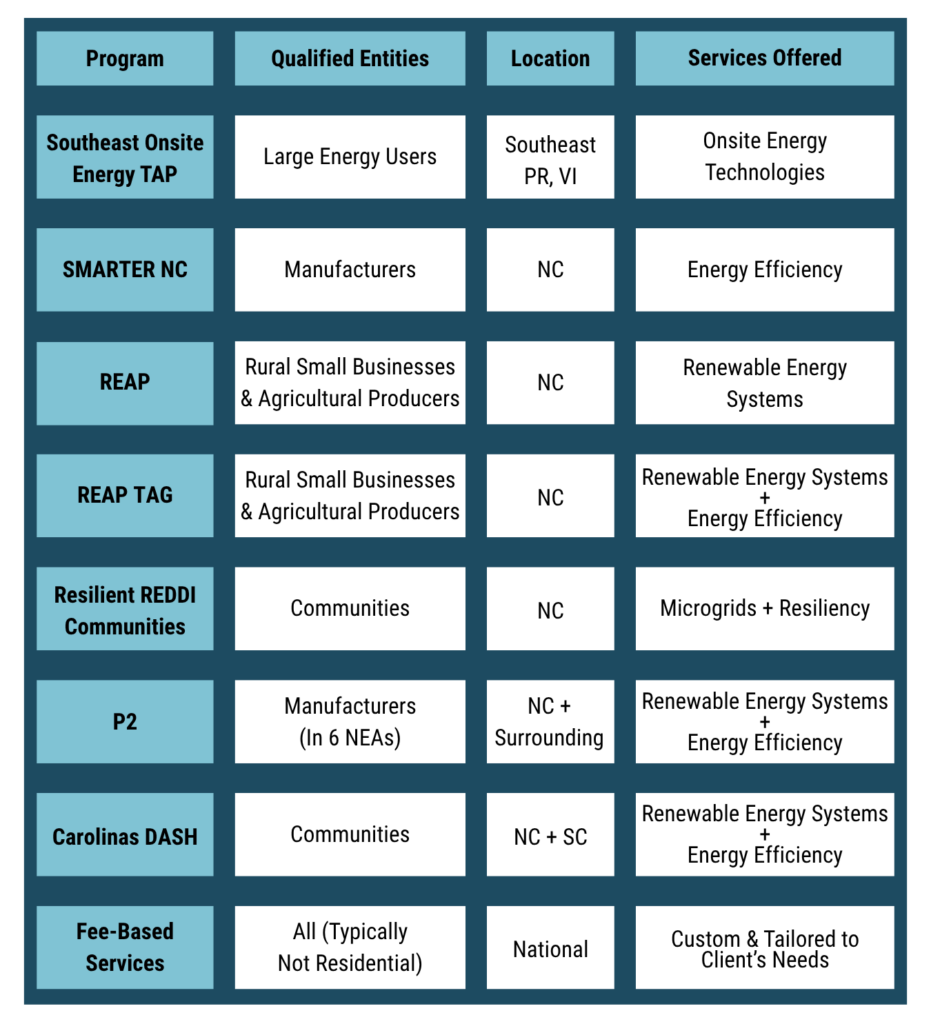
The CPIE team is committed to providing fact-based, technically accurate work to support various energy projects. The table below gives an overview of the services the team can offer through their many programs.
NCCETC is a member of the North Carolina Department of Commerce led project, Smart Manufacturing Adoption to Realize Transformative Energy Reductions for North Carolina (SMARTER NC), funded by the U.S. Department of Energy (DOE). Both NC State University’s Industry Expansion Solutions (IES), an extension and outreach department, and NCCETC are on the team. Through the SMARTER NC project, small-to-medium manufacturers can receive assistance to offset costs and integrate “smart” manufacturing technologies. These technologies include practices like additive manufacturing, 3D printing, and any process where products are built in a way that reduces waste.
The CPIE team’s role in SMARTER NC is to provide energy assessments for facilities that are exploring opportunities in smart technology implementation. The energy assessments typically focus on the energy savings that will result from the smart technology of interest. If the technology relates to electricity, gas, or wastewater and does not have substantial energy savings, the team can perform a targeted assessment. A targeted energy assessment can look at a particular system such as instrument air, chillers, or boilers. If there is no system of interest, the team can do a general site walk-through assessment where they will observe all of the facility’s equipment to identify potential energy savings opportunities.
NCCETC Associate Director Isaac Panzarella is the head of the CPIE team, and also is the lead for the Southeast Onsite Energy Technical Assistance Partnership (TAP). This program is funded by the DOE and includes two partner universities: the University of Puerto Rico Mayagüez (UPRM) and Tennessee Tech University. The Southeast Onsite Energy TAP is part of a network of 10 regional Onsite Energy TAPs, which help industrial facilities and large energy users transition to onsite energy practices that lower costs, reduce emissions, and contribute to the economy.

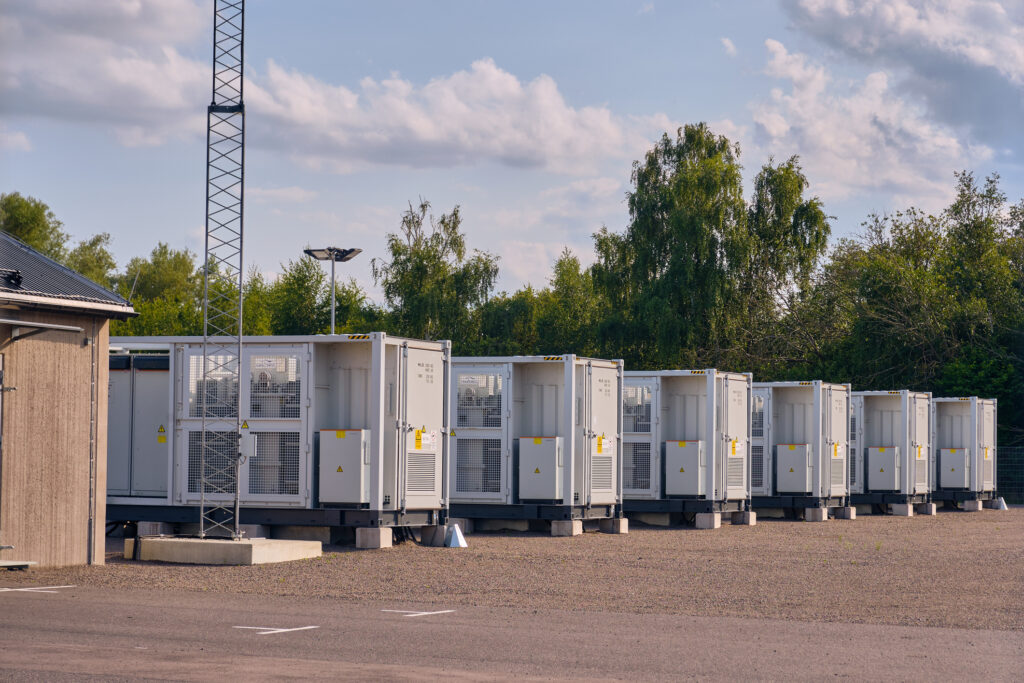
Onsite energy technologies include battery storage, district energy, fuel cells, geothermal systems, CHP, industrial heat pumps, renewable fuels, solar photovoltaics, solar thermal, thermal storage, wind power, and other distributed energy solutions. These technologies generate or store electric and thermal energy directly at the location where it is consumed, which gives it the term “onsite energy”. The Onsite Energy TAPs offer specialized, regionally specific services that include technical assistance, end user engagement, and stakeholder engagement.
The CPIE team can evaluate facilities for onsite energy opportunities and deliver advanced services to optimize economic impact while mitigating risks throughout the process. They also focus on education and outreach by actively engaging with policymakers, utilities, and other key stakeholders to identify pathways that make onsite energy integration more accessible.
Another project the CPIE team focuses on is the Pollution Prevention (P2) Program, an Environmental Protection Agency (EPA) initiative that supports businesses interested in adopting source reduction practices. Source reduction is any practice that reduces, eliminates, or prevents pollution at its source – before it gets recycled, treated, or disposed of. These practices help businesses save money and provide environmental benefits. East Carolina University is the primary grant recipient of the P2 Program with NCCETC as a sub awardee. Through this program, the CPIE team provides technical assistance to businesses in six national emphasis areas (NEAs). The EPA has identified six industrial sector NEAs that have many opportunities for pollution prevention, economic, and environmental impacts.
The six industrial NEAs are:
- Food and Beverage Manufacturing and Processing
- Chemical Manufacturing, Processing, and Formulation
- Automotive Manufacturing and Maintenance
- Aerospace Product and Parts Manufacturing and Maintenance
- Metal Manufacturing and Fabrication
- Pollution Prevention in Native American Communities and for Alaska Native Villages
NCCETC can assist these industries by conducting onsite energy assessments and providing training for site personnel.
The team has also been focused on a project that will help characterize resiliency when it comes to clean energy technologies. The Resilient Renewable Energy to Diminish Disaster Impacts on Communities (Resilient REDDI Communities) project is intended to develop a set of resiliency metrics and create a playbook that will guide communities interested in integrating energy resilience strategies. The CPIE team supports communities across North Carolina through this project, and has most recently been involved in efforts to implement microgrids throughout Asheville. The team has engaged with a network of emergency managers, utilities, community organizations, and other interested parties to learn which practices would be most beneficial when it comes to providing reliable energy in the event of a disaster.
Although many of the team’s projects focus on large-scale energy operations, the CPIE team also provides technical assistance through a U.S. Department of Agriculture (USDA) initiative that reduces the cost burden for small business and agricultural producers who are looking to implement energy efficiency improvements and renewable energy systems. The Rural Energy for America Program (REAP) provides funding for rural small business and agricultural producers that submit applications for the implementation of specific renewable energy technologies. The USDA has provided funding to NCCETC through the Renewable Energy Development Assistance (REDA) program and the USDA REAP Technical Assistance Grant (TAG) program. This funding allows the CPIE team to support eligible facilities in North Carolina with technical assistance and application support. The team can identify appropriate renewable technologies and conduct energy assessments to determine generation potential, project cost, projected savings, and technology viability.
Visit the CPIE page on the NCCETC website to learn more about the team’s work. To request technical assistance or other energy services, please complete the brief form linked on this page.