
DELTa Navigates New Challenges for Large Electric Loads
Article sections
The U.S. has seen an increase in electricity consumption over the past few years as demand continues to rise with the expansion of data centers, manufacturing, and industrial electrification. Utilities, energy regulators, policymakers, and other stakeholders are looking for new ways to forecast growth, plan for infrastructure, and ease customer expectations. Many entities are changing or creating new tariffs for large-load customers to help manage increasing costs while meeting goals for economic development, energy affordability, and clean energy.
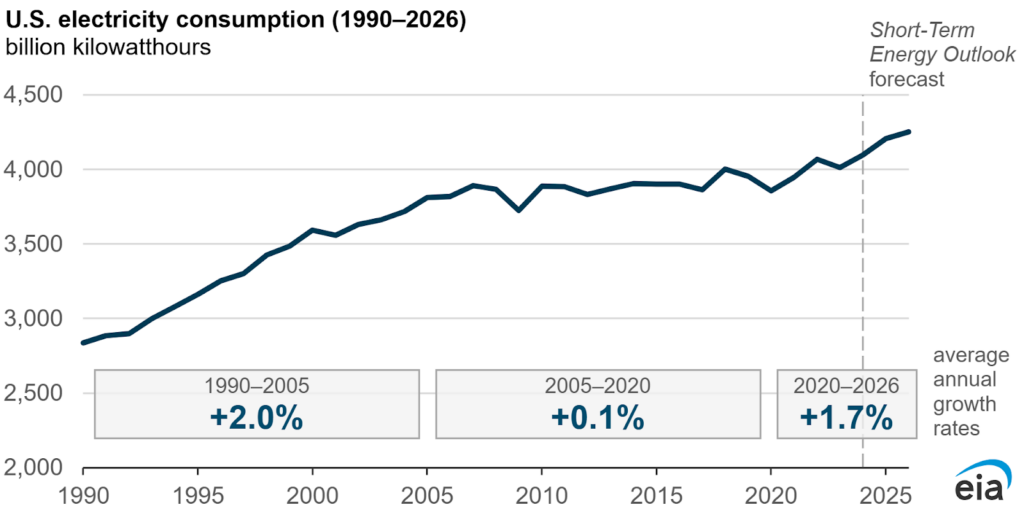
Data source: U.S. Energy Information Administration, Monthly Energy Review and Short-Term Energy Outlook, May 2025
Data values: Electricity Overview (history) and U.S. Electricity Industry Overview (forecast)
The NC Clean Energy Technology Center (NCCETC) and the Smart Electric Power Alliance (SEPA) have partnered to help navigate these challenges by providing comprehensive insights that support local policy objectives for electric load growth in the United States.
In July 2025, NCCETC and SEPA launched the Database of Emerging Large-Load Tariffs (DELTa), a public, user-friendly resource that aggregates, summarizes, and tracks utility rates and contracts designed for large electric loads.
The resource was developed to support informed decision-making across all 50 states by providing access to evolving tariffs that impact how utilities respond to increased load growth from energy-intensive facilities. It is crucial for utilities, energy regulators, policymakers, industries, and other stakeholders to be prepared for rapid load growth from large-load customers like data centers and manufacturing facilities. This database helps clarify pathways to development and mitigate risks to other customers while supporting economic development and clean energy procurement.
DELTa includes electric utility tariffs that are pending, approved, and effective in managing issues stemming from large-load non-residential customers. Examples of service rules and formal utility policies are also available. The database provides U.S. investor-owned utility tariffs along with selected tariffs introduced by public power, electric cooperative, and generation and transmission-only (G&T) utilities.
NCCETC and SEPA released an update to the database on November 10, 2025, the first quarterly update since its initial launch in July. 25 tariffs were added in the quarterly update, making a total of 65 approved and proposed tariffs included in DELTa.
The full database can be downloaded by completing a brief form on SEPA’s website. NCCETC and SEPA have also developed an interactive map where individuals can explore the status and focus of tariffs, along with minimum customer load requirements. The map can be filtered by utility, and by tariff focus related to: General Commercial & Industrial Customers; Large-Load Customers; Data Center Customers; and Cryptocurrency Customers.
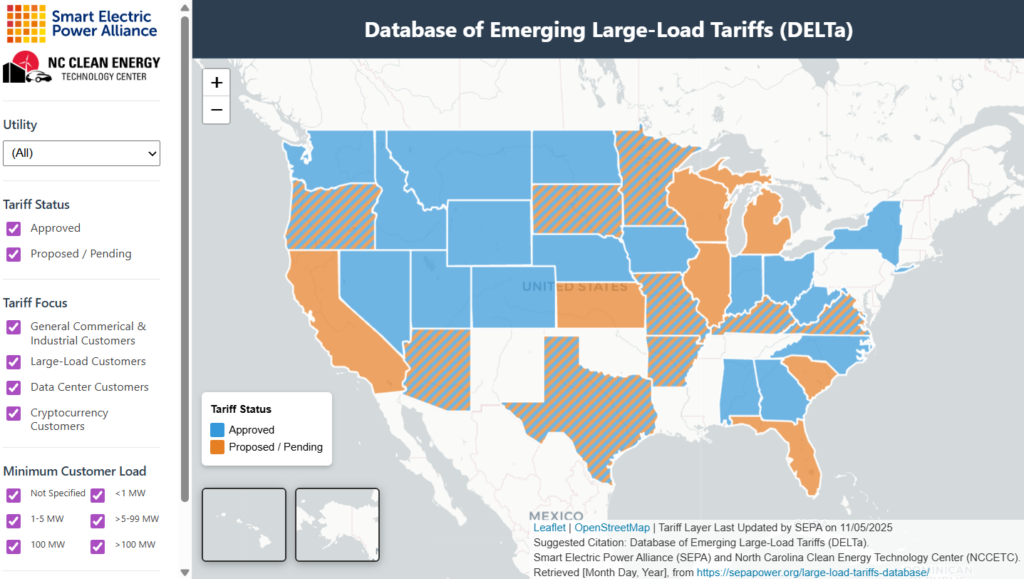
DELTa also offers case summaries and analyses of approved and proposed tariffs, as well as a tool to compare how utilities are adapting rate structures to support economic development and grid reliability.
NCCETC Senior Policy Analyst Justin Lindemann says, “As large loads like data centers, new manufacturing, and crypto-mining reshape utility service needs, it’s essential to track how utilities across the United States have responded–and continue to respond. This database highlights both innovative and modified tariffs aimed at addressing current and anticipated grid impacts, supporting clean energy development, and protecting existing customer classes from cost shifts, while also shedding light on structural trends that could guide how other utilities respond to similar challenges.”
The tariffs in DELTa serve one or more of the following goals:
- Improving transparency, customer protections, and utility risk management for large energy users.
- Clarifying the commitments required from customers before utilities invest in large-load infrastructure.
- Encouraging large-load customers to reduce peak demand and support clean energy integration.
- Defining customer size or operational thresholds where tailored rate structures align better with grid needs and policy priorities.
The information available in DELTa is obtained directly from documentation published by utilities either on their websites or filed in regulatory dockets before state public utility commissions. NCCETC regularly tracks state legislation and regulatory dockets across all 50 states, seen in the 50 States Reports that can be accessed through DSIRE Insight. SEPA monitors industry developments related to load growth, grid modernization, system resilience, and carbon reduction to supplement the information provided in DELTa.
NCCETC and SEPA plan to continue updating DELTa on a quarterly basis. Those who download the public database will receive an email notification when the database is updated.