Solar Grazing – a Win for Farmers, Developers and the Grid
By: Brittany Santore, Training Project Manager
At the beginning of August, I had the pleasure of attending the Solar Farm Summit in Chicago along with Steve Kalland, Executive Director of the North Carolina Clean Energy Technology Center (NCCETC), and NC State assistant professor, Dr. Andrew Weaver, who was a featured panelist at the Summit.

From the very first plenary session, I was struck by powerful statistics, eye-opening insights, and creative strategies shaping the future of farming, agrivoltaics, and solar energy. By the end of the Summit, three key themes stood out—each pointing to the urgent need to bridge agriculture and solar energy for a more sustainable and profitable future.
Agrivoltaics Offer New Opportunities to Family Farms
Family farms are the backbone of American agriculture, making up 96% of all farms and operating 41% of U.S. agricultural land, according to the U.S. Department of Agriculture. Despite their vital role, 51% of family farms report negative income from farming. As keynote speaker Jenny Moffitt of the American Farmland Trust emphasized, these upside-down economics place many farms at risk of losing their land altogether.
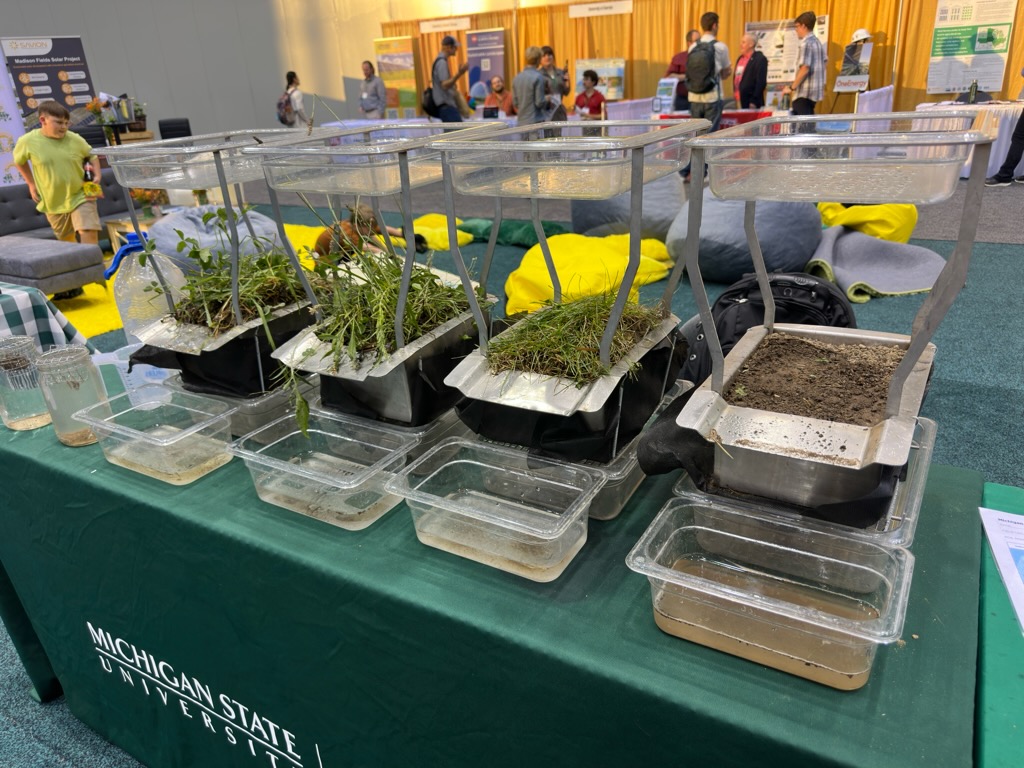
By combining farming with solar energy on the same land, agrivoltaics transforms farmland into a multipurpose asset. By producing solar power and food or livestock products on the same land, farmers can:
- Diversify their income
- Keep farmland in agricultural use – still growing crops or raising livestock
- Help meet increasing energy needs
This dual land use helps stabilize farms while providing the grid with the energy it urgently needs.
Meeting Soaring Electricity Demand with Smart Solutions
Electricity demand in the U.S. is projected to grow by nearly 80% by 2050, compared to 2023, according to a recent report from ICF International.
While agrivoltaics can include crops, pollinator habitats, or livestock, solar grazing with sheep has emerged as a particularly effective practice. Sheep naturally manage vegetation around solar panels, saving time and money on maintenance while keeping land productive and family farmers involved.
As Dr. Weaver shared at the Summit, “Sheep grazing on solar sites can reduce mowing and maintenance costs, keep the land in use for agricultural purposes, and improve community relations.”
Education is Key
A theme repeated throughout the Summit was the importance of community education. Farmers, ranchers, solar grazers, and developers alike often face opposition when first introducing agrivoltaics. However, the more communities learn about the environmental, economic, and social benefits, the more engaged they become.
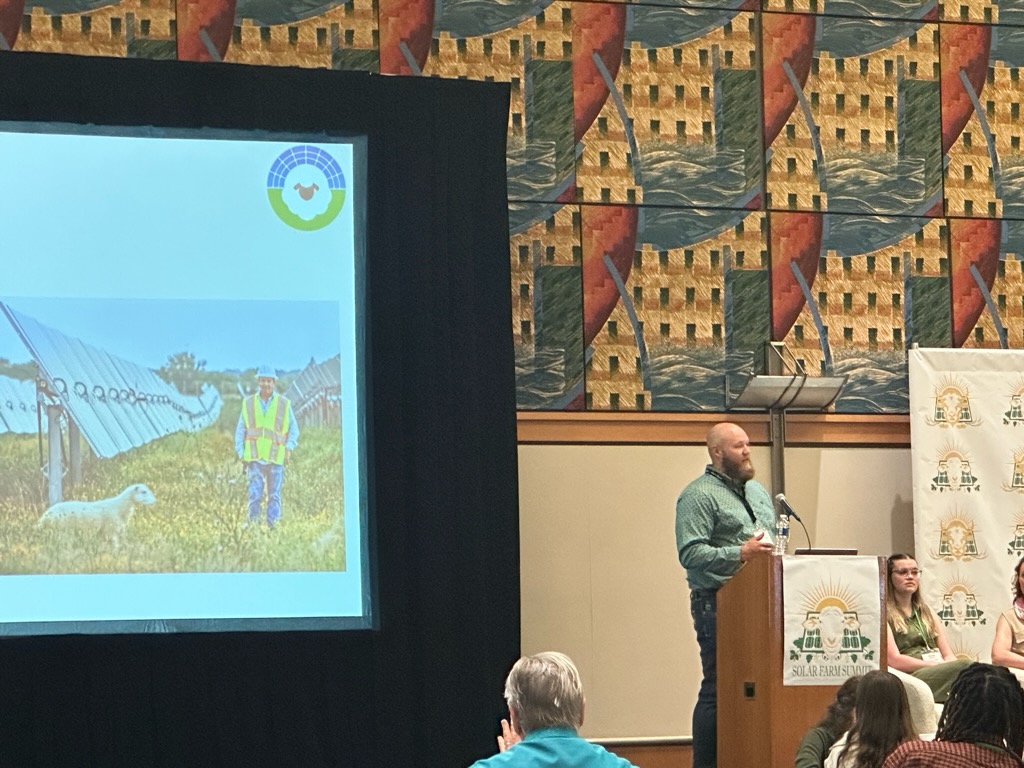
One particularly surprising insight came from Camren Maierle, Director of Producer Education and Research of the American Lamb Board: nearly three-fourths of lamb consumed in the U.S. is imported. This creates a powerful market opportunity for American farmers to expand domestic production while also creating opportunities for solar operations and maintenance professionals. Pairing sheep grazing with solar projects can diversify income, inject the grid with additional energy to help meet the rising demand, preserve farmland for agricultural production, and support family farmers and local communities.
From Conference Insights to Hands-On Training
The lessons from the Solar Farm Summit underscore the need for skilled professionals who can bridge solar energy operations with agricultural practices. That’s why the NCCETC is launching new training designed to meet this moment.
This one-day course equips solar professionals to evaluate the operational benefits of solar grazing and safely perform operations and maintenance (O&M) on livestock-integrated solar sites.
Operations & Maintenance of PV Systems
In this two-day course, solar professionals will gain both the technical knowledge and practical experience necessary to perform system testing, conduct performance evaluations, adhere to safety protocols, and implement effective maintenance practices.
Bundle the two courses for a three-day, comprehensive learning experience and receive $200 off the combined cost.
You can read more and register here or contact the Center’s Training & Workforce Development Team to learn more cleanenergy@ncsu.edu.